Elastic Net Regression

Before understanding Elastic Net, let’s briefly recall what we learned about Ridge and Lasso.
Regularization helps prevent overfitting by adding a penalty term to the loss function. It controls model complexity and stabilizes coefficients.
We studied:
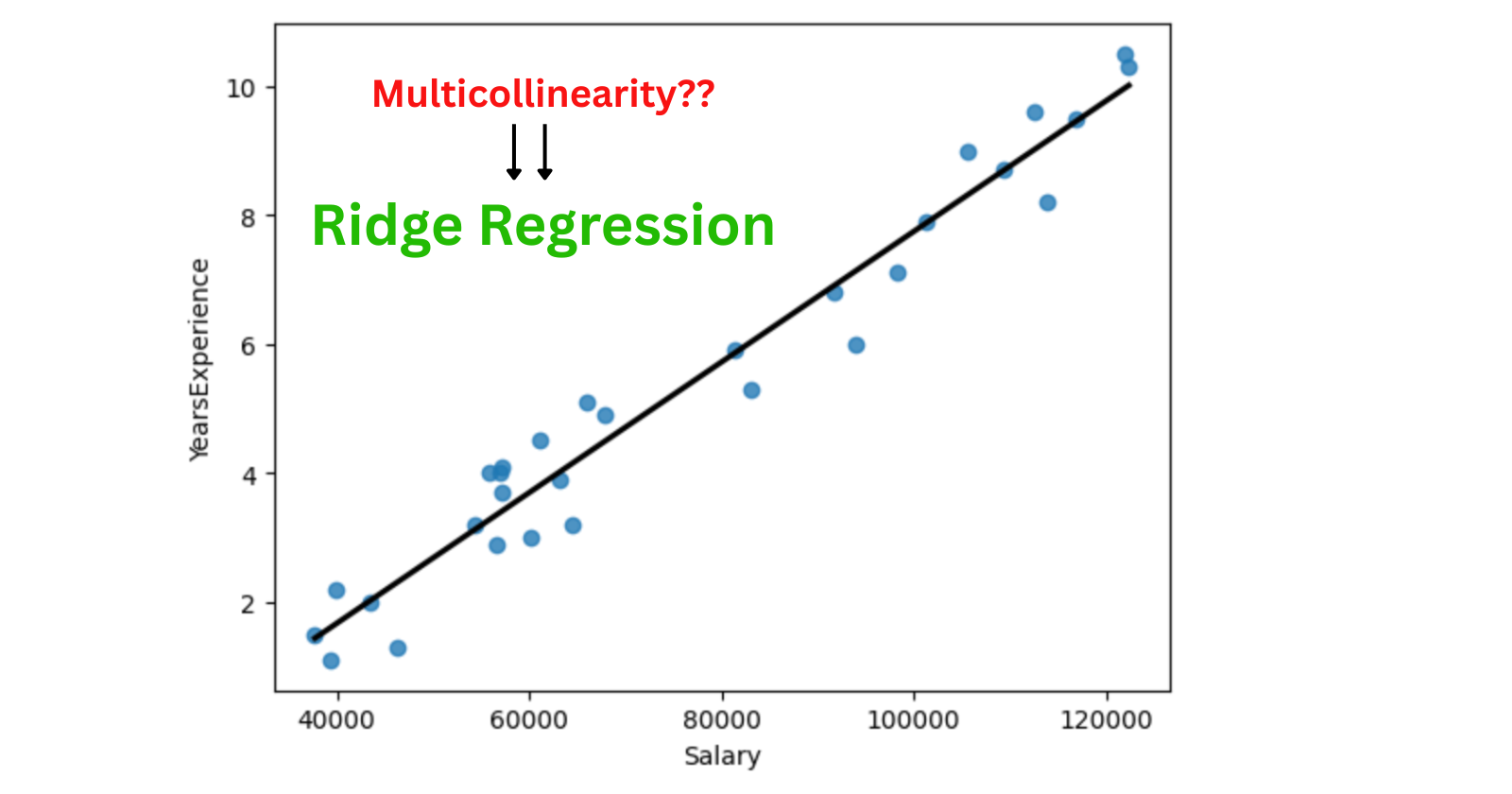
Ridge Regression (L2 Regularization) – Shrinks coefficients but does not eliminate them.
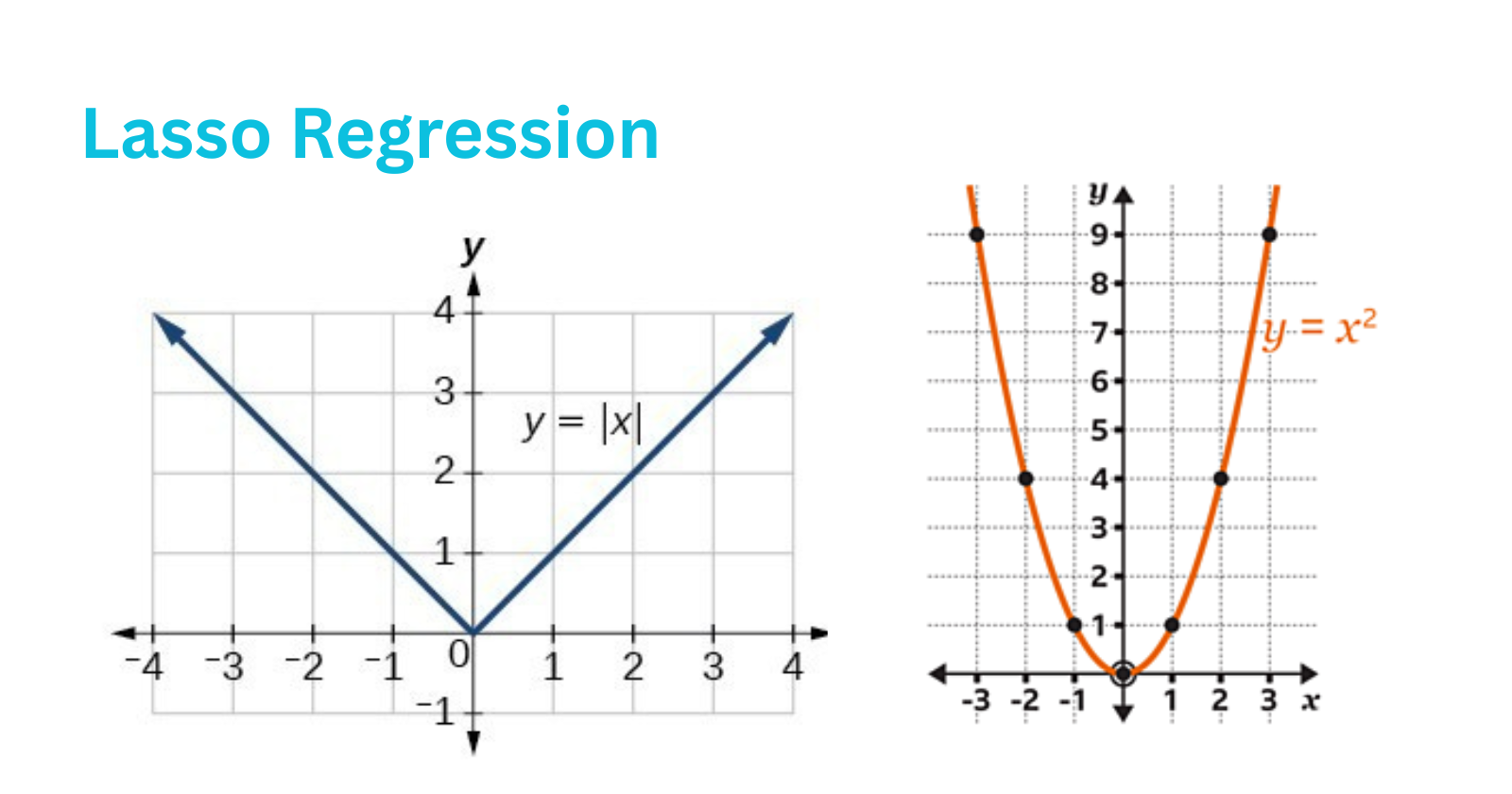
Lasso Regression (L1 Regularization) – Shrinks coefficients and can set some exactly to zero (feature selection).
Both methods solve important problems, but each has limitations.
Elastic Net was created to combine the strengths of both.
Why Do We Need Elastic Net?
Let’s revisit the limitations.
Limitation of Ridge
Ridge shrinks coefficients but never makes them exactly zero.
So even irrelevant features remain in the model.
Limitation of Lasso
Lasso performs feature selection, but:
If features are highly correlated, Lasso may randomly pick one and discard the others.
When the number of features is greater than the number of samples (p > n), Lasso can select at most n features.
It can become unstable when predictors are strongly correlated.
So what if we want:
Feature selection (like Lasso)
Stability with correlated features (like Ridge)
That is where Elastic Net comes in.
What is Elastic Net?
Elastic Net is a regularization technique that combines both L1 and L2 penalties.
The loss function becomes:
$$Loss = MSE + \lambda_1 \sum_{j=1}^{p} |\beta_j| + \lambda_2 \sum_{j=1}^{p} \beta_j^2$$
Or commonly written as:
$$Loss = MSE + \lambda \left( \alpha \sum_{j=1}^{p} |\beta_j| + (1 - \alpha) \sum_{j=1}^{p} \beta_j^2 \right)$$
Where:
λ controls overall regularization strength
α controls the mix between L1 and L2
α=1 → Lasso
α=0 → Ridge
0<α<1 → Elastic Net
So Elastic Net is literally a blend of Lasso and Ridge.
Each coefficient βj\beta_jβj is influenced by three forces:
Force 1: MSE term - Pushes β in the direction that reduces prediction error.
Force 2: L1 term - Applies a constant pull toward zero, encourages sparsity, and creates exact zeros.
Force 3: L2 term - Applies smooth quadratic shrinkage, stabilizes coefficient,s and handles multicollinearity.
So Elastic Net is literally the combination of two shrinkage behaviors.
Why Elastic Net Handles Correlated Features Better
Suppose two features are highly correlated.
In Lasso:
- It tends to choose one and discard the other.
In Ridge:
- It keeps both and shrinks them.
In Elastic Net:
- It tends to keep both but shrink them together.
This is called the grouping effect.
Elastic Net encourages correlated predictors to be selected or removed together. That makes it more stable in high-dimensional settings.
Effect of Parameters
When λ increases, overall shrinkage increases, variance decreases and bias increases.
When α increases, the model behaves more like Lasso, and there is more sparsity.
When α decreases, model behaves more like Ridge, less sparsity and more stability
Choosing λ and α is usually done using cross-validation.
Advantages of Elastic Net
It performs feature selection while maintaining stability.
Correlated predictors tend to be selected together.
Effective for High-Dimensional Data, especially when p > n.
More Stable Than Pure Lasso, less randomness in feature selection.
Disadvantages of Elastic Net
Two Hyperparameters to Tune, both λ and α must be selected carefully.
No Closed-Form Solution, it requires iterative optimization methods.
Still Introduces Bias lke other regularization methods, coefficients are shrunk.
When Should You Use Elastic Net?
Elastic Net is preferred when:
You have many correlated features
You want feature selection but Lasso is unstable
You are working with high-dimensional datasets
You want a balance between sparsity and stability
Conclusion
Elastic Net combines both L1 and L2 regularization to create a model that is flexible, stable, and effective in complex settings.
By integrating the strengths of Ridge and Lasso, Elastic Net not only shrinks coefficients to control model complexity but also eliminates weak features through sparsity. At the same time, the L2 component stabilizes the solution and handles correlated predictors more effectively than Lasso alone.
As a result, Elastic Net reduces variance, improves generalization, and produces models that are both interpretable and reliable.